
· by Michael Blair, Nashville's Contractor
We treat a contingency as part of a renovation budget, never as an admission of poor planning, and federal rehab lending does the same. HUD’s handbook for the FHA 203(k) rehabilitation loan defines the contingency reserve as funds “set aside to cover unforeseen project costs” and requires one on any house 30 years or older. In an older Nashville house, what sits behind the plaster is the part of the scope nobody can price from the hallway.
How much to hold
The FHA’s figures are the most useful published yardstick we know of. Under that same handbook, a house 30 years or older carries a required reserve of 10 to 20 percent of the repair costs, with the minimum raised to 15 percent when the utilities are not working. On a house under 30 years old the reserve is up to the lender, capped at 20 percent, and becomes required at 10 to 20 percent when there is evidence of termite damage. We use that band whether or not a loan is involved, and we budget toward the top of it when the wiring, plumbing and framing are original or nobody knows what they are.
Hold it separately rather than mentally, or it gets spent on upgrades before the surprises appear. HUD keeps it apart too: a borrower who puts in their own money for the reserve has it recorded under a separate category in the repair escrow account.
What triggers it here
Wiring is the first thing we look at once a wall is open. CPSC’s publication on aluminum wiring says homes built before 1965 are unlikely to have aluminum branch circuits, but cables installed between 1965 and the mid 1970s, in new homes, additions and rewired circuits, may contain it; failing aluminum connections seldom give easy warning signs, and the CPSC tells homeowners not to attempt the repair themselves. In older houses we also check for knob and tube wiring and galvanized supply pipe, and we look for rot at the base of walls and under bathrooms. Moving a plumbing fixture needs a plumbing permit according to Metro Codes’ page on renovating a single-family residence, and the new work is inspected against the codes on Metro’s adopted codes list, which include the 2024 International Plumbing Code and 2024 International Existing Building Code with local amendments.
A wall that turns out to be structural changes the paperwork as well as the price, since the same Metro page lists replacing any structural element, joist, rafter or stud, and taking out any wall, load bearing or not, among the jobs that require a building permit; our post on the permit and inspection sequence explains what follows. Lead and asbestos are the other two. According to EPA’s Renovation, Repair and Painting Program page, about three-quarters of US homes built before 1978 still contain some lead-based paint, and anyone paid to disturb painted surfaces in a pre-1978 home must be certified and trained in lead-safe work practices; in Tennessee, EPA runs that program itself. EPA’s asbestos overview gives no single cutoff year, listing vinyl floor tile and its adhesive, textured wall and ceiling coatings, vermiculite insulation and coated hot water and steam pipes among the places it may be found, and warns that remodeling can release the fibers. The federal asbestos work rules summarized in EPA’s NESHAP overview exclude residential buildings with four or fewer dwelling units, which takes most houses out of the notice requirements without making the material any safer to cut into.
- Ten to twenty percent of repair costs on homes 30 years or older
- Up to twenty percent, at the lender’s discretion, on newer homes
- Aluminum branch wiring from 1965 to the mid 1970s
- Lead paint in homes built before 1978
- Asbestos in old floor tile, textured coatings and pipe coverings
- A wall that turns out to be structural, which needs a permit
How can you shrink the unknowns before budgeting?
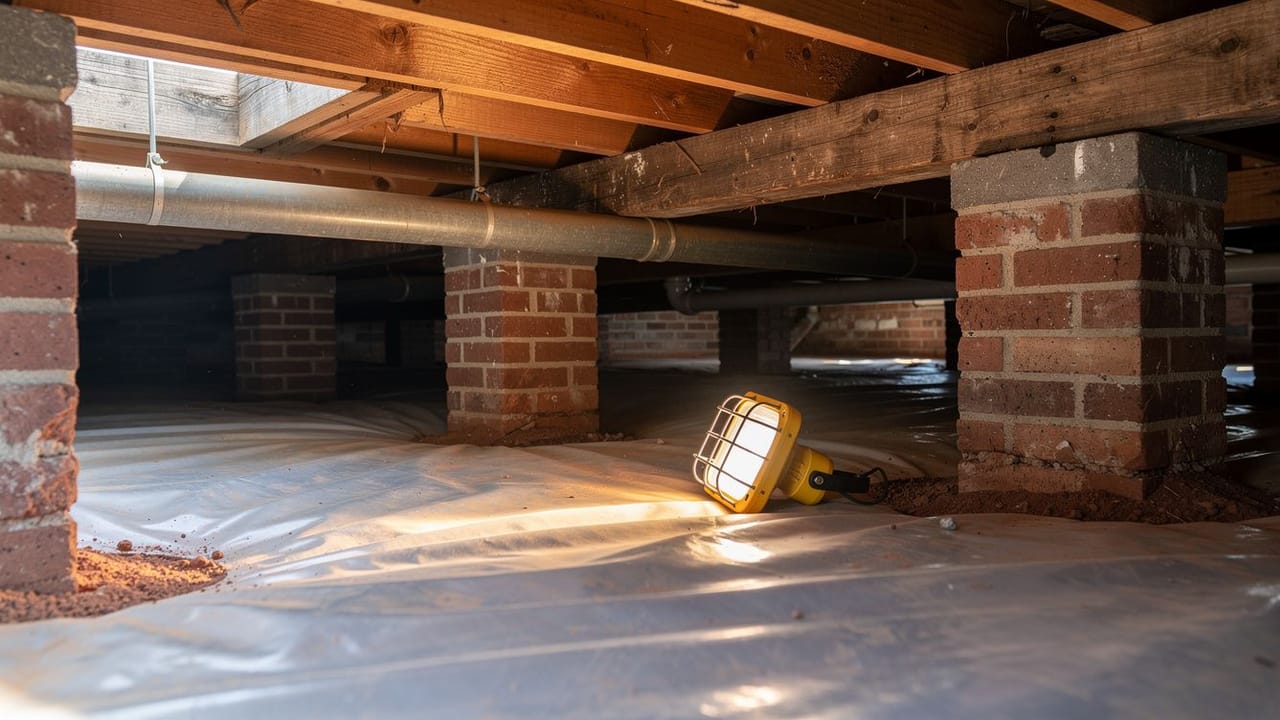
Before we finalize a budget on an older house, we open a small area of wall and look in the crawl space, because what turns up there settles questions that would otherwise sit in the contingency. On a house built before 1978 we treat that first cut as lead-safe work.
We would also rather write per-unit prices for likely discoveries into the contract, per sheet of sheathing or per foot of pipe, so a surprise becomes an arithmetic problem instead of a negotiation. The other clauses worth having are in our post on contract terms, and the one on change orders covers what happens when a discovery has to be priced on the day.
What should a contingency be spent on?
Contingency is for discoveries. Spending it in week two on better tile means the rot found in week five has no budget behind it. HUD’s 203(k) rules draw the same line: only once the rehabilitation is complete may the reserve fund improvements left out of the original work write-up, and then through a change order that lists the labor and material costs.
If the project finishes without needing it, that is the good outcome rather than a wasted allocation, and under those rules a borrower who funded the reserve personally can take a refund or put what remains toward the loan principal. Our contractor guide sets out what drives the rest of the price on a Middle Tennessee job, and when you have a scope in mind, ask us for a free estimate with the contingency shown as its own line.
Sources
- HUD, Single Family Housing Policy Handbook 4000.1, 203(k) Rehabilitation Mortgage Insurance Program — Contingency reserve defined; 10 to 20 percent required on structures 30 years or older, 15 to 20 percent when utilities are not operable, discretionary up to 20 percent on newer structures; own-funds reserve held in a separate category; use for added improvements only after completion by change order; refund or principal reduction of what remains
- U.S. Consumer Product Safety Commission, Publication 516, Aluminum Wiring — Aluminum branch wiring unlikely before 1965, possible in cables installed from 1965 to the mid 1970s; failing connections seldom show warning signs; do not repair it yourself
- Metro Nashville Codes and Building Safety, Renovate a Single-Family Residence — Plumbing permit to relocate a fixture; building permit to replace a structural element or remove a wall even if non-load bearing; the permit triggers required inspections
- Metro Nashville Codes, Adopted Codes List — 2024 International Plumbing Code and 2024 International Existing Building Code adopted with local amendments
- U.S. EPA, Lead Renovation, Repair and Painting Program — About three-quarters of US homes built before 1978 contain some lead-based paint; paid renovators must be certified and use lead-safe practices; EPA administers the program in Tennessee
- U.S. EPA, Learn About Asbestos — Where asbestos may be found in a house; remodeling can release fibers when the material is disturbed
- U.S. EPA, Asbestos NESHAP Overview — Federal asbestos renovation and demolition work practices exclude residential buildings with four or fewer dwelling units
FAQ
The Contingency Every Renovation Needs — questions
How much contingency should I budget?
The FHA’s 203(k) rehab loan rules are a sound yardstick: 10 to 20 percent of the repair costs on a house 30 years or older, at least 15 percent when the utilities are not working, and up to 20 percent at the lender’s discretion on a newer house. We budget toward the top of that range when the systems are original or unknown. Hold it as an actual separate figure rather than a mental one, because contingency held loosely gets spent on upgrades before the surprises arrive.
What surprises turn up in older Nashville homes?
The ones we look for are aluminum wiring, which the CPSC dates to cables installed from 1965 to the mid 1970s, older wiring and supply pipe, rot at wall bases and under bathrooms, and walls that turn out to be structural, which need a Metro building permit to change. Lead paint is a consideration in any house built before 1978, where EPA requires paid renovators to be certified and use lead-safe practices. Asbestos can be in old floor tile, textured coatings and pipe coverings; the federal NESHAP work rules exclude houses of four or fewer units, but disturbing the material still releases fibers, so it is tested and handled properly.
Can I reduce the risk of overruns?
Yes, by reducing the unknowns before the budget is final. We open a small area of wall and get under the house into the crawl space before settling the scope, and on a pre-1978 house we do that with lead-safe practices. Agreeing per-unit prices for likely discoveries in the contract, per sheet of sheathing or per foot of pipe, also turns a surprise into arithmetic.
What is a contingency in a construction budget?
Money held for costs nobody can see at the start, such as rot, old wiring or a hidden structural wall. HUD’s 203(k) rules define it that way and require it on houses 30 years or older. Keep it as its own line, spend it on discoveries rather than upgrades, and count leftover money as a good outcome.