
· by Michael Blair, Nashville's Contractor
The most reliable protection on a construction project is that payment follows completed work. Once payment gets ahead of progress, you are funding the job rather than buying it. The state puts it in fewer words: the 2018 Commerce and Insurance brochure for choosing a contractor tells homeowners not to let the payments get ahead of the work. Here is how we think the money on a custom home or a large remodel should be laid out, and what to ask for when someone else is doing the building.
A sound structure
A modest deposit to secure the schedule and order materials, then payments at defined milestones, then a holdback kept until the punch list is complete. Write all three into the contract. The Tennessee Attorney General’s guidelines for home repair contracting name an exact schedule for payment as one of the things a contract should specify, along with start and completion dates and the total cost, and our post on what a construction contract should say covers the other clauses.
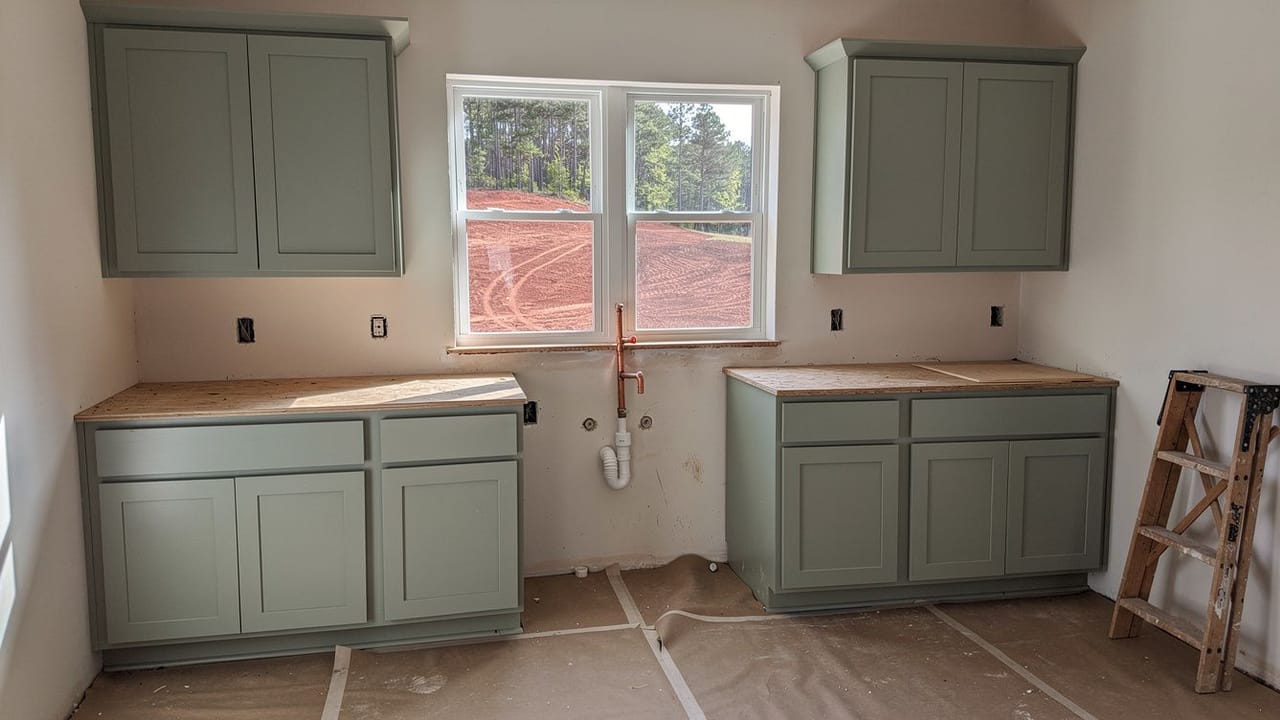
We set milestones as things you can see: rough-in inspection passed, drywall finished, cabinets set. A date on the calendar arrives whether or not the work has, while a finished stage is something you can walk through before you write the check. That is our practice, not a state requirement. Neither state publication puts a figure on the holdback either, so settle the amount and the condition that releases it before anyone signs.
How big should a contractor’s deposit be?
Enough to cover materials ordered specifically for your job and to hold your place on the schedule. Tennessee’s two consumer publications set the ceiling differently. The Attorney General’s guidelines say a reputable contractor can usually charge building materials and does not normally need a large down payment, and that where one is required it should not exceed 10% to 25% of the total price. The Commerce and Insurance brochure says never to pay more than one-third down, and it lists pressure to pay more than half the cost up front as a red flag. Both are published advice. The Board for Licensing Contractors’ rules deal with licensing, insurance and home improvement contractors, and we found no deposit cap or payment schedule in them, so on your job the limit is whatever the contract says.
The far end of this is the scam the Attorney General’s home repair scam warning describes, where a fake contractor demands full payment or a large down payment before starting, then never shows up or leaves once a substantial payment is made. For special-order items such as windows or cabinetry, ask to see the supplier’s invoice instead of paying an unexplained percentage, or do as the Attorney General’s guidelines suggest and pay the building supply store for the materials yourself, with delivery to your jobsite. Pay by check or money order made out to the company and keep the receipt; the brochure and the scam warning both say not to pay in cash. And before any money changes hands, check the contractor’s license and record.
- A deposit sized to special-order materials, inside the state’s published limits
- Payments tied to stages you can see
- No payment ahead of the work done
- A holdback in the contract until the punch list is complete
- Proof that subs and suppliers are paid, on larger jobs
- Check or money order to the company, never cash
Lien waivers
On larger projects, a subcontractor or supplier who goes unpaid may be able to put a lien on your property, even though they were working for the general contractor rather than for you. The Attorney General’s guidelines tell homeowners to make sure all subcontractors are paid to prevent a lien from being placed against the property. How far that reaches when you have already paid the general contractor in full depends on Tennessee’s lien law and the facts of the job, which makes it a question for a local attorney.
So before each payment on a substantial job, ask for proof that the people on site have been paid for the work it covers. Lien waivers signed by the subcontractors and suppliers are one form that proof can take. It is a fair request to make of any builder, us included.
When should you stop paying a contractor?
If work stops and the reason is not clear, ask for it in writing and hold the next payment until you have an answer. Read the contract’s payment and delay terms before you withhold money it says is due, and if the sum is large, talk to an attorney first. Be most careful at the end of the job: the Attorney General’s guidelines warn that a final payment or a signed certificate of completion can carry legal consequences when you are unhappy with the work, and suggest settling the dispute or calling an attorney before doing either.
Document everything from the beginning, so that if it goes badly you have a record rather than a recollection. The same guidelines suggest photographs or video of the area before work starts and again once it is done, copies of every material receipt, and any change to the contract put in writing and initialed by both parties, which is how we handle change orders on our own jobs. If you would like a bid with the payment schedule spelled out stage by stage, ask us for a free estimate.
Sources
- Tennessee Attorney General and Division of Consumer Affairs, Guidelines for Home Repair Contracting (2011) — Contract should specify an exact payment schedule; down payment, where required, not over 10%-25% of the total price; pay the supply store for materials yourself; pay by check or money order to the company; make sure subcontractors are paid to prevent a lien; final payment and certificate of completion warning; photographs, receipts, changes in writing and initialed
- Tennessee Department of Commerce & Insurance, Consumer Tools for Selecting a Contractor (2018) — Never more than one-third down; do not let payments get ahead of the work; do not pay with cash; pressure to pay more than half up front is a red flag
- Tennessee Attorney General, Division of Consumer Affairs, Home Repair Scam — Fake contractors demand full or a large down payment, then never show up or leave once a substantial payment is made; avoid paying in cash
- Tennessee Secretary of State, Rules of the Tennessee Board for Licensing Contractors (chapter 0680) — The Board’s rule chapters (licensing, insurance, home improvement contractors); no deposit cap or payment schedule found in chapters 0680-01 or 0680-07
FAQ
Paying a Contractor Without Losing Leverage — questions
How much deposit should a contractor ask for?
Enough to cover materials ordered specifically for your job and to hold the schedule, not a large share of the price before work begins. Tennessee’s Attorney General says a down payment, where one is required, should not exceed 10% to 25% of the total price, and the state Department of Commerce and Insurance brochure says never to pay more than one-third down. For special orders, ask to see the supplier’s invoice, or pay the supply store for the materials yourself as the Attorney General suggests.
What is a lien waiver and do I need one?
It is a signed statement from a subcontractor or supplier about the payment they have received for their work. Its exact effect depends on its wording and on Tennessee law, so on a large job have an attorney look at the form. The reason to ask is that an unpaid subcontractor can put a lien on your property, and the state Attorney General tells homeowners to make sure all subcontractors are paid for exactly that reason. Proof of payment before each draw, whether waivers or something else, is a fair request on a substantial project.
What do I do if work stops?
Ask for the reason in writing, hold off on the next payment until you have an answer, and read what your contract says about delays before you withhold anything it says is due. Tennessee’s Attorney General suggests resolving a dispute or contacting an attorney before making a final payment or signing a certificate of completion. Keep a written record from the start, with photographs or video, dated notes of conversations, material receipts and every change order, because documentation helps if the dispute goes further.
How are contractors usually paid?
In stages that follow the work. A modest deposit orders materials and holds the schedule, payments come at milestones you can walk through, such as a passed rough-in inspection, and a holdback stays back until the punch list is done. Tennessee’s consumer guidance says not to let payments get ahead of the work and never to pay in cash.