
· by Michael Blair, Nashville's Contractor
A lot of the calls we get start the same way: someone has the land, maybe a few acres outside Franklin or Lebanon, and needs a builder. On most rural parcels in Middle Tennessee there is no sewer main at the road, so the house cannot be drawn, priced or permitted until the ground has been approved for a septic system. That approval comes from the state or the county, not from us, and the soil decides what kind of system the house gets and where it can go. Here is how the permit works, so the first visit to the land does not set the job back.
Who issues a septic permit for a new house in Tennessee?
The Tennessee Department of Environment and Conservation’s Division of Water Resources issues it, and its septic system FAQs say a permit is required for the construction, modification or repair of a septic system, residential or otherwise. A new house on land without sewer is construction, so the permit comes before the system is built.
In a handful of counties the county handles it under contract with the state. TDEC’s page on third-party permits and final inspections lists those contract counties, and Williamson and Davidson are the two on that list in our part of the state. A lot near Franklin or Brentwood goes to Williamson County; anywhere the list does not name, the application goes to TDEC.
Inside Davidson County, many lots can tie into a public sewer instead. Metro Water Services’ water and sewer permits page says taps are paid for and scheduled through Metro’s ePermits system, and whether a line reaches a given parcel is a question for MWS. Sewer or septic is the first thing we find out about any lot on our custom homes jobs.
How should the land be prepared for the soil evaluation?
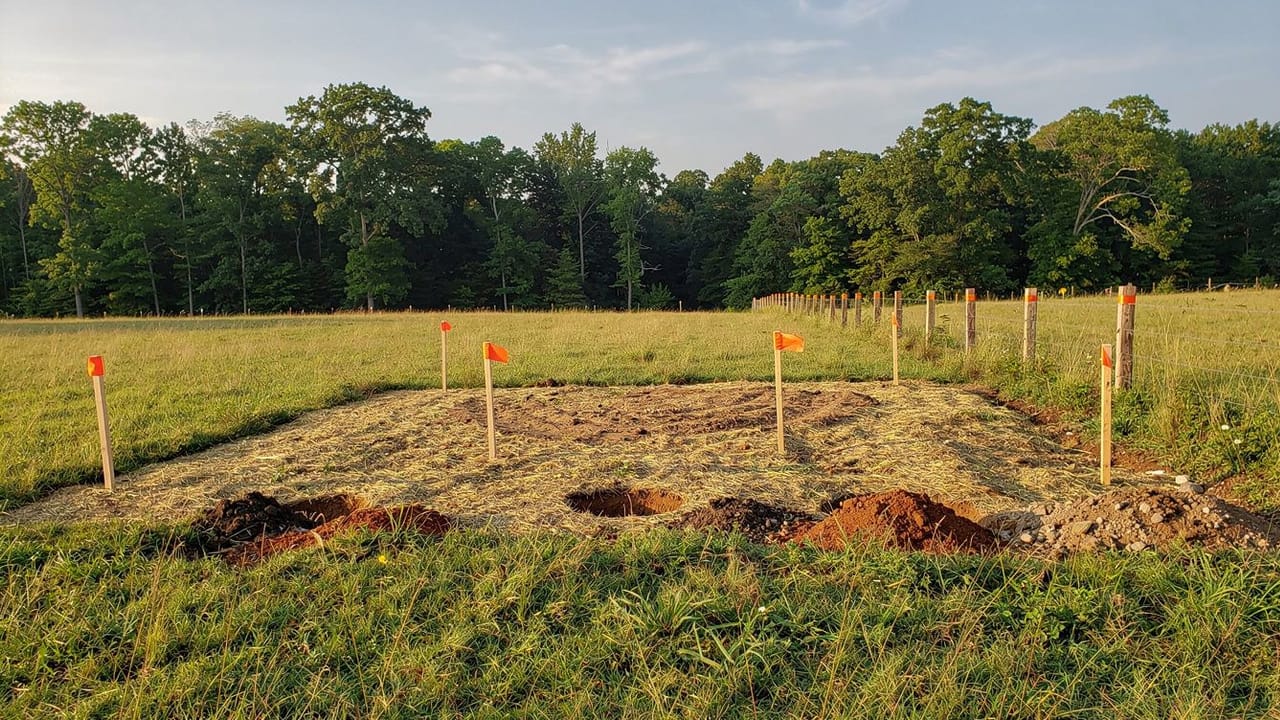
It should be marked and mowed but left undisturbed. A TDEC environmental scientist visits the site to evaluate the soil and decide what type of system it can take, and the TDEC FAQs set out what has to be done before that visit:
- Mark the property lines and corners, with intermediate stakes no more than 200 feet apart on long lines
- Stake the four corners of the house or building pad
- Mow or bush hog the house site and the areas where the soil will be evaluated
- Do not disturb, cut or fill the soil
Why the house has to be placed before the soil is tested
The staking rules mean the house is located on the land before anyone looks at the soil. The evaluator is judging whether the ground around a specific pad can take a system, so moving the pad after the visit can put the house on the wrong side of the soil that was approved. We walk the lot, settle the house position with the owner and stake it, and only then ask for the evaluation.
The last rule matters most on a building lot. Clearing and grading are usually the first work on a new house, and our site work and hardscapes crews would normally be cutting a driveway and a pad early on. On a septic lot, that work waits until the evaluation is done, because cut or filled ground is not the soil the state needs to see. How each lot drains and what sits under it varies across Middle Tennessee, so the order of the dirt work is something we decide lot by lot.
The evaluator may also ask for a site plan or a soils map from a private soil consultant. TDEC keeps a list of approved soil consultants on its soil consultants page, and since July 1, 2025 the department itself approves them.
How long does a septic permit take, and can it go faster?
TDEC allows itself up to 45 days from receipt of a complete application, according to its septic FAQs. Fees vary with the size and type of the system, and a denial comes with a notice of the reasons.
There is a second route. Since October 1, 2024, the third-party permit page says a water resources engineer may prepare the permit package in place of the department or the contract county, and a certified soil scientist may submit an application for a system under 750 gallons per day with a signed soils map. The department or contract county then has 10 business days to act on the package.
The work ends with an inspection. The installer has to schedule a final inspection before the system is covered, and a Certificate of Completion follows; under the third-party rules an engineer may do that inspection and submit the report within five business days. If you have land and are starting to plan a house on it, send us the address or parcel and we will walk it with the septic question first.
Sources
- TDEC Division of Water Resources: Subsurface Sewage Disposal System FAQs — Permit requirement, the site evaluation, lot preparation, the 45-day processing time, fees, denial notices and the final inspection.
- TDEC Division of Water Resources: Third-Party Permits and Final Inspections — Engineer and soil scientist submittals since October 1, 2024, the contract counties, and the 10-business-day review.
- TDEC Division of Water Resources: Soil Consultants — The list of approved soil consultants and TDEC approval since July 1, 2025.
- Metro Water Services: Water and Sewer Permits — Sewer taps in Davidson County paid for and scheduled through ePermits.
FAQ
Septic Permits for a New Home in Middle Tennessee — questions
How long does a septic permit take in Tennessee?
TDEC allows up to 45 days from the day it receives a complete application. If a water resources engineer or certified soil scientist prepares the package through the third-party route that began October 1, 2024, the department or contract county has 10 business days to act on it once received.
How do I prepare my land for a septic soil evaluation?
Mark the property lines and corners, with stakes no more than 200 feet apart on long lines, stake the four corners of the house pad, and mow or bush hog the house site and the test areas. Do not cut, fill or otherwise disturb the soil before the evaluator comes.
Who issues septic permits in Williamson County?
Williamson County does. It is one of the contract counties TDEC lists, along with Davidson, where septic permits are handled by the county under an agreement with the state. In a county that list does not name, the application goes to TDEC’s Division of Water Resources instead.
Can a soil scientist or engineer get my septic permit instead of the county?
They can prepare it. Since October 1, 2024, a water resources engineer may prepare the permit package in place of the department or contract county, and a certified soil scientist may apply for a system under 750 gallons per day with a signed soils map. The agency still reviews and acts on it.
Who inspects a septic system before it is covered?
The installer has to schedule a final inspection before the system is covered, and a Certificate of Completion follows once it passes. Under the third-party rules, a water resources engineer may perform that final inspection instead of the agency and must submit the report within five business days.